The Best Fluffy Pancakes recipe you will fall in love with. Full of tips and tricks to help you make the best pancakes.


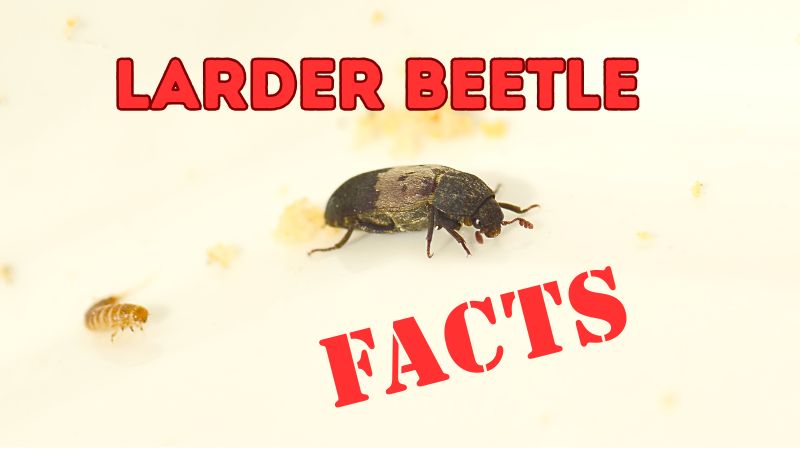
Whether you’ve stumbled across a mysterious beetle near your pantry or you’re just a curious bug enthusiast, larder beetles are worth a closer look. These protein-loving scavengers have a long history of sneaking into homes and feasting on everything from pet kibble to cured meats.
In this post, we’ll uncover fascinating facts about larder beetles—their unusual habits, distinct appearance, surprising hiding spots, and their role in nature’s cleanup crew. Prepare to be both informed and a little amazed by these tiny, unsung members of the insect world! 🐞
Don’t miss these related articles:
Table of Contents
- What Are Larder Beetles?
- What do Larder Beetles Look Like?
- How to Identify Larder Beetle Feces
- Do Larder Beetles Smell?
- Do Larder Beetles Fly?
- What Time of the Year are Larder Beetles Found in the Pantry?
- Larder Beetle Life Cycle
- What Do Larder Beetles Eat?
- Larder Beetle Damage: From Museum Artifacts to Buildings
- Conclusion
What Are Larder Beetles?
Larder beetles get their names from the place they are often found – in your larder (an old word for your pantry or cupboard, where you store food, especially grains and meat). Larder beetles are less-commonly known as skin beetles or by their Latin term, Dermestes lardarius. Some people may refer to them as the dermestid pantry beetle, but pantry beetles, pantry bugs, and cabinet beetles, are the more friendlier terms.
You may have seen these pantry beetles in your house but never knew what they were. Some people refer to them as “pantry bugs.” Larder beetles are a type of carpet beetle, but they only attack woolens that have been soiled with blood, fish oils, or other high protein stains.
Regardless, you want to know how to get rid of a larder beetle.
What do Larder Beetles Look Like?
First of all, larder beetles and pantry moths are NOT the same insect. This page is about the larder beetle, as seen in the photo below. It looks like a small black house bug with a brown stripe. A larder beetle has a cream to yellow colored band across the top of their wing covered with six dark colored spots inside it, according to the University of Minnesota Extension Office.
Some may describe it as a black beetle with a brown stripe or gold stripe.

Larder beetles have one of the hardest shells in the insect world. It takes a lot to crunch one of them! The adult larder beetle is about 1/4-1/3 inch in length.
Before you see the beetles, you will see the larvae. The larvae are about 1/2 inch in length,
worm-like, and distinctly hairy and reddish to dark brown in color (note the pair of spines on their tail end that curves backwards).
It’s the larvae, or contact with their bristly hair that might cause an allergic skin reaction.

How to Identify Larder Beetle Feces
Larder beetle feces—also known as frass—typically appears as tiny black or dark brown specks scattered near infested food sources, cracks, or crevices. It can resemble coarse ground pepper or fine grains of dirt, and is often found alongside shed larval skins or damaged packaging.
Here’s how to spot it:
- Color: Dark brown to black
- Size: Very small, often less than 1 mm
- Location: Near dried meats, pet food, or organic materials; inside pantries, cupboards, or behind baseboards
- Texture: Dry and crumbly, sometimes mixed with other debris like cast skins
If you’re seeing these specks along with beetle activity, it’s a strong sign of infestation.
Source: Virginia Coop Extension
Do Larder Beetles Smell?
According to CookingPro.net, “Severe infestations can produce a musty or foul odor that emanates from the infested materials. If you notice a strange smell in your kitchen or pantry, it may be a sign that a larder beetle infestation is present.”
Do Larder Beetles Fly?
Yes, larder beetles can fly—and they’re surprisingly good at it! According to What’s That Bug, it could affect the beetles’ capacity to infest different areas within homes and other structures.
Adult larder beetles have fully developed wings hidden beneath their hard outer wing covers (elytra), which they use to fly short to moderate distances. This flying ability helps them infiltrate homes through open windows, vents, or gaps in doors.
I’ve been around larder beetles my entire life, and was shocked to find out this fact that the wings are hidden under the hard shell. I’ve smashed some of those before, and it’s a very hard shell, but I suppose of June bugs can fly, these little guys can, too (full disclosure, I’ve neve seen a flying one).
Their flight is most common during warmer months, especially spring and summer, when they’re actively searching for food or places to lay eggs. So if you’ve spotted one buzzing around your pantry or near lights, it’s not your imagination—they’re airborne invaders.
What Time of the Year are Larder Beetles Found in the Pantry?
In the winter, larder beetles often hide in crevices or other warm, sheltered places like your walls or garage. In spring, they emerge, looking for food sources and a place to lay their eggs. The adult larder beetle female prefers to strategically lay eggs on dead insect carcasses. Females will lay around 100 eggs, which hatch in just a few days, eat consistently, and reach maturity in about six weeks.
I usually see the larder beetles in April here in the midwest (USA).
Larder Beetle Life Cycle
Larder beetles are scavengers that feed in the dark. According to Terminix, they “play possum” until the danger is passed. Walking about your house, causing slight tremors, is enough to send them into hiding. In reality, they scoot around pretty fast.
Pantry beetles enter the home as winter nears. They’re most active in the early spring as they mate and deposit eggs in food sources throughout the house (I usually notice them in April). The breed and take shelter in the same food container.

Adult pantry beetles can fly, but most people don’t get to see them, because of their preference for being in the dark.
FACT: On the last molt cycle of the larvae, the skin is used as a plug to cover their burrowing holes in furniture and wood.
Believe it or not, pantry beetle larvae can cause large amounts of structural damage to buildings and furniture because of this. –Pestnet. Poultry buildings have been listed previously as one site that can encounter this.
According to PennState Extension, “Tests have shown that they [pantry beetle larvae] can bore into lead with ease and tin with some difficulty. The boring is for the purpose of providing a protected place for pupation, not for feeding.”
Pantry beetle life cycle diagram sources:
ENVU, PennState Extension, Pest Net
What Do Larder Beetles Eat?
Larder beetle are protein eaters! They especially love dead meat, and even spoiled meat, according to Penn State Extension. Technically, they are omnivores, which means that they will eat both meat and plant-based food. In your pantry, they are attracted to any animal by-product, such as dehydrated meat (like beef stick jerky, dried fish, or bacon bits).
Penn State Extension points out: “The use of refrigeration, the purchase of meats in small quantities, and the lack of home curing of meats, have decreased the economic importance of this insect.” By “economic importance” it means that the larder beetle is not the problem it used to be compared to times when curing meats was more prevalent in society.

Larder Beetle Damage: From Museum Artifacts to Buildings
Pantry beetle food sources are not confined to houses, but museums, mills, livestock facilities, and any place that contains a suitable food source. Museums are a bit surprising, but not really when you think of stuffed animal specimens.
According to Virginia Coop Extension, larder beetles “can destroy museum specimens and valued items made from leather, horn, fur, and other animal products. Entomologist.net goes on to say that mature larvae can weaken structures. “[They] are capable of boring into wood or plaster, causing weakening of structures. This can result in serious structural damage if larvae are allowed to continue.” Mature larvae are drawn to these materials because they are boring in when preparing to pupate.
ODD FACTS: Close relatives of the larder beetle are used to clean the flesh from skeletons used in museums. University of Wisconsin Extension. The University of Wisconsin refers to this as their “Dermestarium” – related to the word Dermestidae a family of Coleoptera that are commonly referred to as skin beetles. Other common names include larder beetle, hide or leather beetles, carpet beetles, and khapra beetles.
Hunters I know in Iowa will boil deer skulls in water all day to assure that all meat, skin, etc. is removed from the bones, assuring a clean mount for displaying inside buildings that do not attract bugs.
Besides the food mentioned above, they can also eat carpet fibers and clothing. Obviously, it pays to keep your house as clean as possible!
Larder bugs can be found in homes, museums, mills, livestock facilities, and any place that contains a protein food source.
Conclusion
Larder beetles may not be the most glamorous of insects, but they certainly earn their place in nature’s ecosystem—as well as on your pest radar. From their scavenger lifestyle and surprising flying ability to their potential to infest pet food, these tiny creatures are packed with quirks. While they aren’t dangerous to humans or pets and don’t bite, their presence indoors can be a sign that something needs cleaning, sealing, or tossing out.
Whether you’re a homeowner battling an infestation or simply intrigued by their biology, learning about larder beetles helps you better protect your space—and maybe even appreciate the hidden dramas playing out in the pantry. Keep your eyes peeled, your storage sealed, and remember: even the tiniest houseguest has a story worth uncovering.