
The Best Fluffy Pancakes recipe you will fall in love with. Full of tips and tricks to help you make the best pancakes.


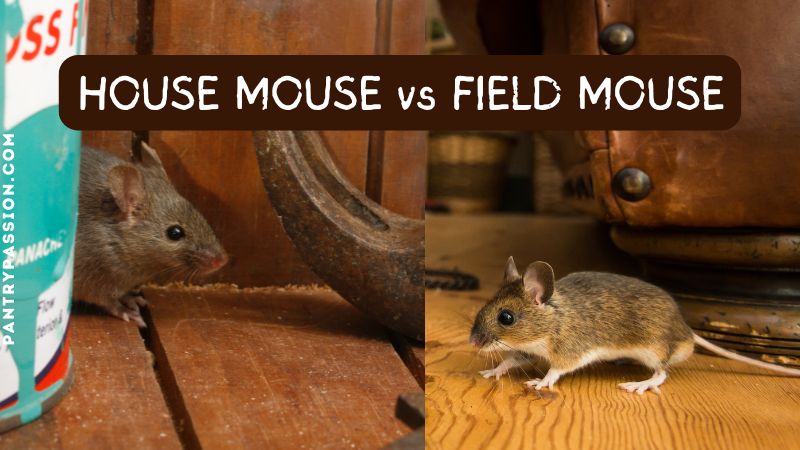
If you’ve ever spotted a tiny blur darting across your pantry floor or heard suspicious scratching behind the walls, you’ve probably wondered: What kind of mouse is that? Not all mice are created equal — and knowing the difference between a field mouse, house mouse, deer mouse, and even the white-footed mouse can help you better protect your home, food, and family pets.
In this post, we’ll break down the key differences in behavior, nesting habits, and health risks—so you can take smart, targeted steps to kick them out and keep them out.
DON’T MISS Pantry Passion’s Complete Article List for Mouse & Rat Prevention!
Table of Contents
- Meet the House Mouse AKA “Dirty Mouse”
- Deer Mouse vs House Mouse
- House Mouse vs Field Mouse: Features & Behavior
- Deer Mouse vs Field Mouse, What’s the Difference?
- Do Deer Mice Have Anything to Do With Deer?
- Trapping a House Mouse vs A Field Mouse
- Do Mice and Rats Hibernate?
- Are Mice and Rats Nocturnal?
- Do Mice Hoard Food?
- Do Mice Carry Hantavirus?
- What Does A Mouse Nest Look Like?
- What Does Mouse Poop Look Like? 💩
- 💩 Rodent Droppings Comparison Chart
- What Does Mouse Urine Look Like?
- Pantry Passion’s Final Thoughts
Meet the House Mouse AKA “Dirty Mouse”
House mice are year-round indoor squatters, while field mice tend to sneak in when the weather turns cold.
I call them the “dirty mice” because that’s what my hubby calls them. They breed rapidly and aggressively destroy your home and belongings. He sees the deer mice as gentle wild animals.
Below highlights some of their characteristics.

Deer Mouse vs House Mouse
These two are often confused, but they’re quite different — especially when it comes to health risks. “Field mice” is a term that encases all mice outside of the common house mouse. Deer mice would be included with that term.
Key Difference:
- House mice are more persistent indoor pests, keeping residence year-round indoors, thus the term “house mouse.”
- House mouse are solid in color; deer mice have white under bellies.
- Deer mice have distinctively large eye.
- Deer mice prefer outside, although they will move in for winter shelter (more seasonal invaders).
- Deer mice are the primary carrier of hantavirus, which can be deadly to humans.

House Mouse vs Field Mouse: Features & Behavior
Let’s revisit this matchup so you know which one you’re dealing with in your home or property.
| Feature | House Mouse | Deer Mouse |
|---|---|---|
| Color | Uniform gray or brown | Brown-gray with white belly & feet |
| Tail | Long, same color as body | Long, bicolored |
| Habitat | Indoors year-round | Outdoors, enters homes seasonally |
| Health Risk | Low (salmonella, allergens) | High (hantavirus) |
| Behavior | Bold, curious, nests in walls | Shy, nests in hidden outdoor spots |
| Droppings | Pointed ends | Rounded ends |
Takeaway: If you’re seeing mice in your pantry year-round, it’s likely a house mouse. If they show up in fall or winter and look two-toned, you may have deer mice.
Deer Mouse vs Field Mouse, What’s the Difference?
Here’s where things get a little tricky — because “field mouse” isn’t a specific species. It’s a general term often used to describe deer mice, white-footed mice, or even voles. It basically groups every mouse category together excluding house mice.
Field Mouse (General Term)
- Color: Varies — usually brown with white belly.
- Species: Often refers to deer mouse or white-footed mouse.
- Habitat: Fields, meadows, sheds, garages.
- Behavior: Seasonal invaders, especially in fall and winter.
- Risk: Depends on species — hantavirus and Lyme disease are possible.
Outdoor Field Mice Comparison Chart
Here’s a clear, side-by-side comparison of the Deer Mouse, White-Footed Mouse, and Meadow Vole—three small mammals often confused with one another.
| Feature | Deer Mouse (Peromyscus maniculatus) | White-Footed Mouse (Peromyscus leucopus) | Meadow Vole (Microtus pennsylvanicus) |
|---|---|---|---|
| Appearance | Brown back, white belly, sharply bicolored | Similar coloring, less contrast | Chunkier body, short tail, gray-brown fur |
| Tail | Long, distinctly bicolored | Shorter, less sharply bicolored | Very short, barely furred |
| Size | 5–8 inches (incl. tail) | 6–9 inches (incl. tail) | 4–7 inches (incl. tail) |
| Ears & Eyes | Large ears and eyes | Large ears and eyes | Small ears, small eyes |
| Habitat | Forests, grasslands, attics | Wooded areas, brush, suburban homes | Fields, meadows, gardens |
| Behavior | Agile climber, scatter-hoards food | Similar habits, slightly more ground-dwelling | Burrows underground, active year-round |
| Activity | Nocturnal | Nocturnal | Diurnal and nocturnal |
| Nesting | Insulation, logs, attics | Brush piles, sheds, walls | Surface tunnels, grassy nests |
| Disease Risk | Hantavirus | Lyme (via ticks), less hantavirus risk | Minimal, but can damage crops |
Quick Tips to ID Field Mice
- Tail check: Deer mice have long, two-toned tails; voles have short, stubby ones.
- Body shape: Voles are stockier with smaller ears and eyes.
- Habitat clues: Meadow voles leave visible surface runways in grass; deer mice and white-footed mice are more likely to climb or nest in hidden spots.
What is a Wood Mouse (Apodemus sylvaticus)?
To throw one more field mouse into the mix, there is also a mouse variety known as a “wood mouse.” I’m in the United States, so I left my comparison to the local crew.
A wood mouse (Apodemus sylvaticus) is a small, nocturnal rodent commonly found across Europe and parts of western Asia. It’s often confused with house mice or field mice, but it has distinct features and behaviors that set it apart.
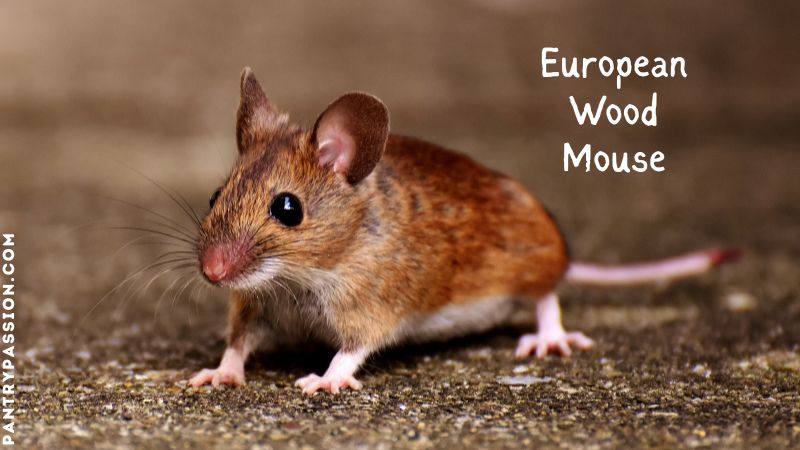
- Appearance: Brown fur with a white or pale underside, large eyes and ears, and a long tail.
- Size: About 3–4 inches long (excluding tail), slightly larger than a house mouse.
- Habitat: Prefers woodlands, hedgerows, gardens, and rural areas. Rarely enters homes unless food is scarce or temperatures drop.
- Diet: Omnivorous—feeds on seeds, berries, insects, fungi, and even small invertebrates.
- Behavior:
- Excellent climber and jumper.
- Creates underground burrows with food storage chambers.
- Scatter-hoards food, especially in autumn.
- Reproduction: Breeds from spring to autumn; females can have multiple litters per year.
Unlike house mice, wood mice have a strong instinct to flee and rarely become tame. They’re more likely to be spotted in barns, sheds, or outbuildings than in kitchens or pantries.
Wood Mouse vs. Deer Mouse: Side-by-Side Comparison
The wood mouse (Apodemus sylvaticus) and the deer mouse (Peromyscus maniculatus) are similar in size and behavior but differ in species, geography, and subtle physical traits. Here’s a practical comparison to help you tell them apart:
| Feature | Wood Mouse (Apodemus sylvaticus) | Deer Mouse (Peromyscus maniculatus) |
|---|---|---|
| Location | Europe and western Asia | North America (U.S., Canada, Mexico) |
| Appearance | Brown fur, white belly, large eyes and ears | Brown fur, white belly, large eyes and ears |
| Tail | Long, slightly hairy, not sharply bicolored | Long, distinctly bicolored (dark top, white underside) |
| Size | 3–4 inches body, tail adds another 3–4 inches | Similar size: 5–8 inches total |
| Habitat | Woodlands, hedgerows, gardens | Forests, fields, attics, rural buildings |
| Behavior | Agile climber, scatter-hoards food | Agile climber, scatter-hoards food |
| Activity | Nocturnal | Nocturnal |
| Disease Risk | Low | Can carry hantavirus and Lyme (via ticks) |
Key Differences
- Geography is the biggest clue: If you’re in Europe, it’s likely a wood mouse; in North America, it’s probably a deer mouse.
- Tail contrast: Deer mice have a sharply two-toned tail, while wood mice have a more uniformly colored one.
- Disease risk: Deer mice are known carriers of hantavirus, especially in enclosed spaces like cabins or attics.
Both species are excellent climbers, stash food in hidden caches, and rarely hibernate. If you’re trying to identify a mouse in your attic or shed, location and tail color are your best clues.
Do Deer Mice Have Anything to Do With Deer?
OK, never in a million years would this question popped into my mind. Then I came across a frantic post by Reddit user WideAwakeLikeADream:
“What are deer mice and what do they have to do with deer?!? I’m not even joking but last Tuesday… I looked out the backyard window only to spot a pair of deer staring at me for an hour or more!! Not that strange though because we see deer around my neighborhood every so often.”
WideAwakeLikeADream goes on to say they caught mice in their house after that. They correlated the fact that they saw deer outside with immediately catching mice in their house.

Seeing more deer activity does NOT increase deer mice in your home. If anything, there is a stronger relationship that both are seasonally foraging near your house, such as fall. That’s when the cold weather is pushing the deer mice to look for a warmer, winter home (your home).
Reddit member ToeJamOfThe40s had a thoughtful reply: “Deer Mice was simply coined because the mouse belly is white and everything else is brownish, which resembles deer colors. There’s no causation for what you explained. If you have a lot of deer poop in your yard, that can attract mice.”
Trapping a House Mouse vs A Field Mouse
Yes, there is a difference between trapping a house mouse vs a field mouse. Using strategy based on mouse type can increase your rate of success. Want to know my best mouse trap strategies? Check out this page.
Although trapping both species involves similar tools, their behavior and habitat preferences can make one trickier than the other. Here’s how to tailor your approach:
| Feature | House Mouse | Field Mouse (Deer Mouse) |
|---|---|---|
| Habitat | Indoors: kitchens, basements, attics | Outdoors: sheds, garages, attics (seasonal) |
| Behavior | Bold, curious, frequent marking | Shy, cautious, excellent climbers |
| Trap Placement | Along walls, near food sources | Near insulation, hidden corners, elevated spots |
| Bait Preference | Peanut butter, chocolate, grains | Seeds, nuts, peanut butter or fluffy nesting material |
| Trap Type | Snap traps, glue boards, live traps | Snap traps, live traps (avoid glue boards for wildlife) |
| Activity Time | Nocturnal, but may appear during day | Strictly nocturnal |
| Challenge Level | Easier to catch due to boldness | Trickier—more cautious and agile |
There are very real challenges to trapping mice, as the chart above shows. It’s not uncommon for seasoned pest control experts to tell tales of “the one they couldn’t catch” as in this story:
Anonymous Reddit user: ” The problem I am having is I can not seem to get the three mice I like to refer to as the breeders. I can not get them trapped. I have even resorted to trying to run them down and (to no great surprise) I was simply not fast enough. I believe there are 2-3 breeders just by how I will kill 10-20 mice in about a week and then there will be another wave of them about 3 weeks later. Their gestation period is 6 weeks roughly, and the mother can be pregnant and nursing at the same time.”
Que the Mouse Hunt movie music!
In addition to these differences, it’s worth mentioning mice vs rat behaviors. I get into the topic of neophobic and neophilic in my mouse trapping strategies article. Knowing the difference between these traits helps you become a better trapper:
- Rats tend to be highly neophobic. They often avoid unfamiliar objects, foods, or changes in their environment.
- Mice, on the other hand, are typically more neophilic—meaning they’re curious and more likely to explore new items or spaces.
Do Mice and Rats Hibernate?
None of these rodents hibernate—they seek warmth, shelter, and food, often inside homes. If you’re hearing scratching or finding droppings this time of year, it’s likely they’ve already moved in.
Are Mice and Rats Nocturnal?
Yes, both rats and mice are nocturnal, meaning they’re most active during the night. This behavior helps them avoid predators and human activity while foraging, nesting, and exploring.
🐭 Mice (House Mice, Deer Mice)
- Peak Activity: Between dusk and dawn
- Behavior: Forage for food, build nests, mark territory with urine
- Signs: Scratching in walls, droppings near food, chewed packaging
🐀 Rats (Norway Rats, Roof Rats)
- Peak Activity: Late night to early morning
- Behavior: Scavenge, chew through materials, establish latrine zones
- Signs: Heavy thumping, gnawed wires, concentrated droppings
Do Mice Hoard Food?
Both field mice and house mice are notorious food hoarders—but they do it a little differently depending on their environment.
- Field mice (like deer mice or meadow voles) are especially known for caching seeds, grains, and nuts in underground burrows or sheltered outdoor spots. It’s a survival strategy for winter when food is scarce.
- House mice, on the other hand, adapt this behavior indoors. They’ll stash food in wall voids, behind appliances, inside furniture, or even in drawers and cabinets—anywhere close to their nest and out of sight.
Both types are opportunistic and will hoard anything from birdseed and pet food to cereal and candy. If you’ve ever found a pile of kibble in your boots or a stash of sunflower seeds under the sink, you’ve likely stumbled upon one of their secret pantries.
Mice do take poison back to their nest. Mice, especially country, “church mice” deer mice, or field mice, tend to hoard. I am not sure about a regular house mouse. Because field mice hoard, instead of putting food on a regular mouse trap, go with a little batting, fluff, or quilt stuffing. They will grab it in a heartbeat for their nest – and lose their life in the process.
My Mouse Hoarding Experience
As a farmwife living in an old farmhouse, I’ve seen it all. One spring I was cleaning up the basement, and I was completely puzzled why a snow boot had little blue pellets inside. Silly me, that was poison. Then I realized that hoarding was going on. It was shocking that the mice could transport that much poison (at least 1/2 a cup or more)!
Over the years, I’ve seen a few of those pellets scattered inside of attic boxes, but no major stashes like that boot. I think the most curious thought was how could they transport that much poison and not die in the process?
This can only be explained by delayed toxicity. Many rodenticides (especially anticoagulants) work slowly—taking several days to kill. Those mice must have worked really fast to fill that boot!
Want to make them tug at the bait? See my trap tips here.
Do Mice Carry Hantavirus?
I don’t lightly dismiss the concern of hantavirus. Attention was drawn to the disease that mice carry when famous actor Gene Hackman’s wife died from it.
Not all rodents carry the hantavirus and not in all geographic regions:
“The hantaviruses that cause HPS are carried by rodents. The deer mouse, the white-footed mouse, the cotton rat, and the rice rat are the most common carriers in the United States. House mice, roof rats, and Norway rats, which are found in urban areas in this country, do not carry hantaviruses that cause HPS. Voles and lemmings also carry hantaviruses, but not those that cause HPS. In Europe and Asia, Old World mice and rats carry other forms of hantaviruses that cause hemorrhagic fever with renal syndrome.” -Source: University Rochester Medical Center
URMC also adds, “Most of the cases have been in Western and Plains states, but states as far east as New York, Pennsylvania, and Vermont have also reported at least one case. More recently, according to the CDC, cases of HPS stemming from related hantaviruses have been documented in Argentina, Brazil, Canada, Chile, Paraguay, and Uruguay.”
Regardless of where you live, rodent droppings need to be handled with care. Bacteria and other diseases can become airborne when disturbed. That means sweeping or vacuuming without precautions can actually make things worse. Droppings are typically small, dark, and rice-shaped, often found near insulation, beams, or storage boxes.
Follow best practices using bleach and protective clothing and air respirators when cleaning up contaminated spaces – especially in outdoor sheds. I discuss this often across all of my rodent control articles, but you might be interested in
- Cleaning out infested attic insulation
- How to clean up after a mouse infestation in attic
- How to clean out a mouse infested grill
What Does A Mouse Nest Look Like?
A mouse nest is a messy, compact bundle of soft materials tucked away in hidden, undisturbed places. Whether it’s a house mouse, deer mouse, or field mouse, their nests share some common traits—but the exact look can vary depending on the species and location (what is in the immediate vicinity to use for nest materials).
It’s not uncommon to see bits of paper/newspaper or cardboard from your house, such as forgotten candy wrappers, a little fluff, insulation, etc. in a house mouse’s nest. They tend to stay inside of the house. A deer mouse doesn’t usually stay inside for too long, but when they do, they like the stuffing from a stuffed toy, quilt, or pillow. Both may even incorporate chewed clothing.
This lawn mower engine held a surprise when the cover was lifted: multiple grass, feathers, and leafy mouse nests! This is definitely a deer mouse at work. Mice moving into vehicles and equipment stored outdoors is a big problem.