The Best Fluffy Pancakes recipe you will fall in love with. Full of tips and tricks to help you make the best pancakes.


Let’s talk about something no one really wants to deal with — dead mice. Whether it’s a mysterious smell creeping through your walls or the aftermath of dead mouse disposal, it’s an unpleasant situation.
In this article, I cover questions you have about dead mice in general, how to locate them, dispose of them, and getting rid of that awful smell!
DON’T MISS Pantry Passion’s Complete Article List for Mouse & Rat Prevention!
Table of Contents
- Do Dead Mice Smell?
- How to Find Dead Mice in House
- Best Way to Dispose of Dead Mice
- How to Get Rid of Dead Mice Smell
- How to Get Rid of Mouse Urine Smell: A Step-by-Step Guide
- Dead Mouse FAQs
- 🌙 Bonus: What’s the Meaning of Dead Mice in Dreams?
- Final Thoughts
Do Dead Mice Smell?
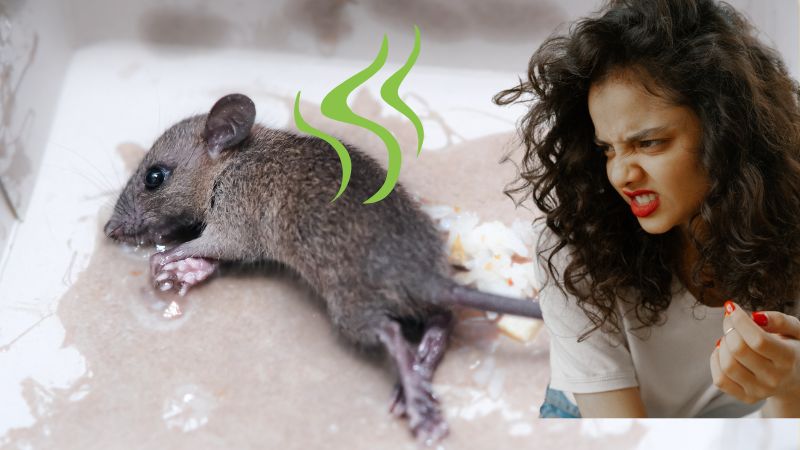
Absolutely! It’s one of the most unmistakable, nauseating odors you’ll ever encounter.
As a mouse decomposes, it releases foul-smelling gases like putrescine and cadaverine — yes, they’re as unpleasant as they sound. The smell can linger and intensify over days, making it difficult to ignore.
Imagine a mix of:
- Rotting food
- Ammonia
- Damp, earthy decay
Does a Dead Rat Smell Like Gas?
Yes, a dead mouse or dead rat does sort of smell like gas. But don’t confuse it with a gas leak in your house! That is a SERIOUS problem and you should call the gas company immediately if you detect a gas leak.
Other people describe dead mouse smell as musky and sour smelling, or similar to rotten food. If you detect this distinct stench in a room, chances are a rodent has died nearby — often inside the walls or under floorboards.
FYI, we had a similar smell in my workplace. We thought a mouse might have died in the walls, but it was an issue with some food stuck in the drain pipes. The smell would be slightly detected one day and not the next. We finally had a plumber come and he quickly narrowed the problem down to the sink in the office break room.
Dead Animal Smell in Wall Smells Like Fish
I get it, if you’ve never encountered a dead rodent or dead animal smell, you have nothing to reference.
This quirky notion of smelling fish, though… that’s different. According to iHeart, “the odor is coming from overheating electrical outlets. The outlets, and other electrical components like circuit breakers and wires, are made using heat-resistant chemicals. When those heat-resistant chemicals get too hot, they melt and release a strange, fishy odor.”
Can the Smell of Dead Mice Harm You?
The smell of dead mice isn’t directly toxic, but prolonged exposure can trigger:
- Headaches
- Nausea
- Respiratory irritation
The real issue is what the smell signals: a rotting body that can attract insects like flies and lead to mold growth or bacterial contamination.
Important: If you suspect a dead mouse is stinking up your space, locate and remove it quickly to avoid secondary problems.
Wash everything again with a solution of warm soapy water, 1 cup to 1/2 gal of white vinegar. I come from an area in Australia where mice plagues occurred about once a decade. I know that smell, and I can smell by just writing about it. When the plagues had died out it was all hands on deck for the clean up and the above is what I learnt was the best method. It will help to leave some pierced lidded containers of bicarb soda on the shelves for a few weeks and use white vinegar in a spray bottle for a room deoderiser.
Facebook Member Anne Mitchell
Smell of Dead Mice in Walls
This is the worst. A dead mouse in the wall can create a lingering, awful odor that’s nearly impossible to ignore. It usually starts subtly — like a musty whiff — and grows stronger over a few days.
Clues you’ve got a wall problem:
- Smell is concentrated in one area.
- No visible source anywhere.
- Odor grows worse despite cleaning.
You may need a professional to open the wall and remove the carcass, especially if you can’t locate it yourself. Other than that, there is nothing you can do except wait it out. I speak from personal experience after a rodent died somewhere underneath a kitchen cabinet.
How Long Do Dead Mice Smell?
It depends on:
- Size of the mouse
- Temperature
- Airflow
- Humidity
Generally, the smell peaks in 2–3 days and can linger up to 2 weeks. In dry, cool environments, decomposition is slower, meaning the smell could last longer.

Using odor absorbers (like activated charcoal or baking soda) can help mask the stink, but the only real solution is removing the source. If the mouse died in the walls or floorboards, it makes it more difficult. Try to get as much fresh air into your house as you can.
The smell of a dead mouse is annoying, but it will subside. You’re probably wondering how one little mouse can smell so much! If the smell is more than you can stand or this happens often (and you suspect an even greater infestation), it might be time to call in the experts.
I know, I know. Those rascals die in places you can’t get to, such as walls, attics, and the back of kitchen cupboards. Again, you have to wait it out or go on vacation – let’s just hope not.
How to Get Dead Mouse Out of Vents and Ducts
Calling in the professionals to clean your ductwork can get very expensive. Know that if you suspect a dead mouse in your HVAC vent/ductwork, it might not really be in there. Waiting the smell out would be the least expensive thing to do.
Hart Home Comfort recommends shutting off the HVAC immediately to stop spreading odor and bacteria. They then direct to inspect a section of the ductwork at a time. Your sense of smell will be the quickest way to narrow down the location.
At the minimum, get a flashlight out and try to peer into the vents. If you have located the dead mouse, pull it out with a wire or vacuum hose. You can even cover the hose with a nylon to use the power of the suction to “grab” the mouse.
Proceed to clean the area as best as you can and as far as you can reach into the ductwork. You might consider a professional duct cleaning.
How to Find Dead Mice in House
Follow your nose! Go on a sniffing quest to pinpoint where the smell is the strongest. The truth: you may never exactly know where the mouse died. It could be decomposing in a wall, ceiling, attic, floor boards, etc.
According to Orkin Pest Control, a dead mouse can be pinpointed by an “unexplained foul smell, …increase in fly activity around a specific area, or visible stains or discoloration on walls or ceilings.”
If you have set traps, the dead rodent will be there, you just have to check them. Mice that have eaten poison may even die right out in the middle of a room. They are weak from the poison and die where they are.
What if I Can’t Remove a Mouse?
Get ready for this solution from Thomas Pest Services:
“If you think you’ve found the dead animal and it can’t be removed, drill a hole through the wall one foot above the floor and pour or inject a disinfectant, odor neutralizer, or masking solution. Be sure to plug the injection holes afterward.”
I think I would have to be really desperate to do that! If you’re living in an apartment, I’m sure your landlord would not approve.
If you do go this route, use a fan to draw fresh air into the treated area, forcing the old air out. Be aware that rotting carcasses can attract insects that feed on them (adding another thing you need to eradicate).
Or let nature take it’s course: the mouse will naturally decompose over time. Unfortunately, you will have to tolerate the smell, but it will pass in a week or so. It’s one thing if it’s only one mouse (I know, the intense odor of a dead mouse smells like a dozen of them!).

If you really do have a serious rat or mouse infestation, those dead bodies need to be removed (and the live ones eradicated). You now have a health hazard on your hands. On top of that, there is too much odor signals to other rodents – it’s like a welcome mat to your home.
At this point you will need to consult a professional pest control service.
Best Way to Dispose of Dead Mice
Your options to dispose of dead mice or rats are these:
- Flush down the toilet.
- Bury in the ground.
- Put in garbage and out for trash pickup (double bag it first).
- Toss in the woods/ditch, etc. out in nature.
- Give to your farm cat unless the mouse died from poison (there is a concern that mice carry diseases, so I wouldn’t give to a pet cat that lives with you).
How to Dispose of Dead Mouse in Trap
A dead mouse in a trap poses a problem, do you release the mouse from the trap, or do you just throw the whole thing away?
Wooden traps are cheap enough that you can throw the whole thing away if you really had a fear of mice and didn’t want to touch it. Of course, the farmwife in me is feeling that you’re just throwing money away. If this is a rat trap, there is a bigger investment (maybe twice the cost – but you do you).
What are your options? You either remove the mouse or you don’t. Use a tongs or grabber to pick up the entire trap and toss it in a bag and seal it shut.

If you don’t like to touch traps, plan ahead and slide the set trap into a paper bag. The Voila! The mouse is caught, pick up the entire paper bag and toss in garbage. The same idea is achieved with a shoe box.
For the brave ones out there (AKA frugal): Put a pair of rubber gloves (if you’re going to reuse the trap it is critical that human scent is not passed onto the trap) on and pry the snap open with your fingers and shake out the mouse where you want it (see previous section). The snap bar is intended to have force and it can be difficult to pull back. I take a flathead screwdriver, slide it under the bar and lift up and can use a lever action to more easily pull the bar up and then shake the mouse off.
Reality is that the mouse could be stuck on the bar via decay. Solicit help; one person can hold the trap down while the other does the prying.
Handling a Dead Mouse
Whether you found a mouse caught in a trap or discovered one post-mortem laying in the middle of the floor, disposal should be careful and hygienic:
- Wear gloves – Always.
- Pick up the dead mouse by scraping the mouse body with a piece of cardboard onto another piece of cardboard. If mouse is in a trap, put gloves on first so as not to transmit human odors to the trap so you can reuse it. Scrape off with a toothpick if necessary.
- Disinfect the area where you found the mouse using bleach or a strong cleaner. I go into great detail on disinfecting a grill that had mice in it.
- Wash your hands thoroughly after removing the gloves.
- Consider a mask if the smell is intense.
What if I’m Scared to Touch a Mouse?
So many people I know are scared to touch a mouse. When I came across “emergency conditioning” I just had to share it with you. Diane Vuković shared this advice and a link to the details from Primal Survivor:
“Mentally prepare yourself for having to pick up a dead mouse (obviously with gloves on). You can do this by looking at pictures of dead mice, imagining picking it up, and going over the steps in detail in your head. Then, when you have to actually do it, it won’t be as terrible. It’s called “Emergency Conditioning” and is a great thing to do for all of life’s challenges.“
Another great idea is to intentionally set the trap inside of a paper bag or box. Mice like their privacy – when they are lured to the cozy space and the trap snaps, all you have to do is pick up the bag and toss it in the garbage!
-Renee Matt, Editor PantryPassion.com
What About Secondary Poisoning?
If the cause of death of mouse or rat is poisoning, there is a concern of other animals eating it, like your dog, cat, or birds of prey. According to the Barn Owl Trust, “Typically it takes 6 to 17 days for a Barn Owl to die after eating 3 mice containing the poison Brodifacoum.” Secondary poisoning doesn’t kill in all cases; the animal may carry traces of poison in their system.
Animals who have ingested in small quantities may feel ill and recover. However, direct or secondary poisoning should always be taken seriously. If you suspect your pet has been poisoned, call the vet.
If the mouse was poisoned, it’s even more important to keep pets and children away during disposal.
Can I Flush a Mouse Down a Toilet?
You can absolutely flush a mouse down a toilet, but should you?
Septic systems don’t particularly like hair, or bones. Hair floats, which can eventually clog up a drain field. Bones don’t get eaten by bacteria very well, so add solids to your tank. The occasional mouse is not going to kill your septic, but best not get in the habit of just throwing everything in it.
How to Get Rid of Dead Mice Smell
To get rid of dead mice smell, it’s important to clean and disinfect. It’s gross to think about, but mice often leave scent trails that consist of left trail of urine, saliva, and pheromones. Killing the bacteria will kill the smell.
The Center for Disease Control offers a complete guide online “How to Clean Up After Rodents.” They even include a section about getting the smell out of a car. If you’re curious, I took a deep dive into cleaning out a BBQ after mice have been in it.
You might consider buying an enzymatic scent urine sanitizer to really put an end to the scent trail (and not attract more mice!). I cover enzyme sprays in greater detail in my article on cleaning out smells from attics.
If you’re looking for a dead mouse odor eliminator, there’s lots of natural ways to get rid of the smell:
- Fresh air (or air purifier)
- Bowl of vinegar
- Box of baking soda
- Charcoal odor absorbers

In addition, you can utilize essential oils to mask the odor of dead mice. According to PuroClean, “Choose oils with aromatic scents like peppermint, eucalyptus, lavender, or lemon. Place a few drops on cotton balls and strategically position them around the room. The oils will disperse… [and] counteract the lingering dead rodent smell.”
Check out Pantry Passion’s Guide to Peppermint Oil
How to Get Dead Mouse Smell Out of Pantry
For pantry and other rooms with dead mice smell,
- First, remove the dead carcass(es).
- Wash and disinfect well with bleach where the mouse died and anywhere the mouse traveled.
- Open any doors on your pantry or kitchen cupboards, and windows in your home or apartment to let fresh air in.
If your pantry is in a closet, open the door. If possible, open windows up in the house. Finally, use the strategies already mentioned, such as placing a bowl of vinegar, baking soda, or charcoal packets in the vicinity to absorb odors.
How to Get Dead Mouse Smell Out of Clothes
My gut feeling is to just dispose of the clothes. But since you asked, I’m answering!
I’ve had excellent luck with removing odors from clothes using this simple formula: 1/2 cup white vinegar + 1/4 cup Castile Soap (I recommend the Whole Naturals Castile Soap brand). Use this with or in place of your regular laundry soap. You must wash the clothes TWICE (each time with the vinegar/Castile Soap solution). I’ve removed musty smells from clothes and tents like a miracle with this solution!
Hanging clothes out on a clothesline in the fresh air and sun helps, too. Other laundry products are specific to eliminating odors in clothing that often use enzymes to break down the smells. In most cases, you will have to wash the clothing a minimum of two times to remove mouse odors.

Bonus: How to Get Rid of Mouse Pee Smell
Dead mice don’t just leave you with a dead mouse smell, it’s the disgusting odors of pee and urine you still have to deal with.
You’re probably seeking mouse odor eliminators, and ways to neutrilze the gagging scent with mouse urine odor eliminators. It’s not something to take pride in that you;’re Googling “How to get rid of mouse infestation smell” or “How to get rid of mouse urine smell in wood.”
The smells are strong, my friend. What is a homeowner to do?
According to Twin Home Experts, rodents can urinate up to 50 times a day! It’s critical to get the smell eliminated because it not only attracts other rodents, it can attract possums and racoons that are looking for a meal. Ever see a porch full of racoon poop? You have to put an end to this problem fast.
How to Get Rid of Mouse Urine Smell: A Step-by-Step Guide
Mouse urine isn’t just unpleasant—itcan linger long after the rodents are gone, clinging to fabrics, wood, and even insulation. If you’re dealing with that sharp ammonia-like stench, here’s how to reclaim your space and breathe easy again.
🧼 1. Gear Up for Safe Cleaning
Before you dive in, protect yourself:
- Wear gloves, a mask, and eye protection.
- Avoid stirring up dust—mouse urine can carry harmful pathogens like Hantavirus.
🔍 2. Locate the Source
Mouse urine tends to accumulate:
- Along walls and baseboards
- Inside cabinets, drawers, or behind appliances
- Near nesting areas or food sources
Use a blacklight to detect urine stains—though be aware it may also highlight other substances. For materials like newspapers, throw them away!
For extreme infestations, you might have to remove drywall and attic insulation.
🧽 3. Clean Hard Surfaces Thoroughly
- Spray a disinfectant with a GOOD ENZYME TO KILL BACTERIA labeled for animal waste and let it sit for 5–10 minutes (this type of products kills that bacteria that is releasing the smell).
- Wipe down with paper towels and dispose of them in sealed bags.
- Disinfect with a bleach solution (1 part bleach to 10 parts water).
What the pros use: a fogger that releases a mist filled with enzymes that can spread through attics or crawl spaces or any other space that you can’t easily reach. Over time, the smell is gone. This option can get very expensive fast, so shop around!
🧺 4. Treat Soft Surfaces
- Wash affected fabrics in hot water with detergent and a cup of white vinegar.
- For carpets or upholstery, use an enzyme cleaner designed to break down organic waste.
- If the smell persists, consider steam cleaning or replacing the material.
🍋 5. Neutralize Lingering Odors
- Place bowls of baking soda or activated charcoal around the area to absorb odors.
- Create DIY sachets with dried lemon peels or essential oils to freshen the air.
- If possible, place furniture outside for a few hours in sunshine and fresh air after cleaning; rotate to make sure all surfaces are soaking in the sun goodness.
A clean home is a happy home—and one that doesn’t smell like a rodent motel. If the odor still lingers after these steps, it might be time to call in a professional.
.
Dead Mouse FAQs
Where Do Mice Die After Eating Poison?
Mice usually retreat to their nests or hidden areas to die after ingesting poison. They also hoard poison, especially field mice.
This makes finding the body frustrating. You might not know a mouse even died until the smell kicks in days later.
Common death spots include:
Inside walls
Behind appliances
In attics or basements
Inside cabinets or drawers
If you’re using poison, always be prepared to hunt down hidden victims. The downside to bait blocks is exactly this — mice don’t die where they eat. You might be surprised to learn that you can find a dead mouse laying in the middle of a room after a poison death.
Most mice die out in the open after ingesting poison, because they are dehydrated and searching for water.
Do Mice Eat Each Other When Dead?
Unfortunately, yes — mice can eat one another after death. It sounds gruesome, but in the rodent world, survival instincts are strong. If food is scarce and one mouse has passed away, others in the colony might resort to cannibalism, especially if the body isn’t removed quickly.
This behavior especially happens under stress. Mice are opportunistic feeders, and in crowded or unsanitary conditions, cannibalism is sadly not uncommon.
Takeaway: If you spot a dead mouse, remove it ASAP — for health reasons and to keep other mice from feasting.
Do Mice Play Dead?
Some animals play dead — opossums are famous for it — but mice? Not so much.
Mice rarely “play dead” intentionally. If you find a mouse that seems motionless, it’s more likely in shock, paralyzed by fear, or actually dead. That said, a mouse might freeze when threatened, which can give the illusion of playing dead.
Tip: Always handle a seemingly “dead” mouse with caution. Use gloves and double-check — it might just be stunned.
🌙 Bonus: What’s the Meaning of Dead Mice in Dreams?
Dreaming about dead mice? You’re not alone. In dream interpretation, mice often symbolize hidden fears, problems, or intrusive thoughts. A dead mouse in your dream could suggest:
- You’re finally letting go of a nagging issue.
- A source of anxiety or irritation is coming to an end.
- You’re feeling guilt about something small but persistent.
Dream tip: If you felt relief in the dream, you might be subconsciously solving a problem. If it felt disturbing, you could be ignoring something in waking life that needs attention.
Final Thoughts
Dead mice may be an icky topic, but understanding their habits helps you stay ahead of the game. From dealing with dreams to disposing of remains safely, we’ve covered every nook and cranny — just like a curious mouse would.
Whether you’re protecting your home, interpreting your subconscious, or chasing that mysterious odor, knowledge is your best defense (plus gloves… always gloves).